

The Truth About Flavors
Facts are facts: Flavored nicotine products attract young people and increase youth use. According to Campaign for Tobacco-Free Kids, nearly 90% of youth e-cigarette users use flavored products, with fruit, candy/desserts/other sweets, mint and menthol reported as the most popular flavors. Also of concern, youth have transitioned to use of disposable and menthol e-cigarettes, two categories of products that remain on the market under current federal restrictions.
When these flavors are heated or aerosolized, the chemicals that create the taste can irritate and damage the lungs. This process has been linked to serious lung injuries, including conditions like popcorn lung, or E-cigarette or vaping product use-associated lung injury (EVALI).
Although many of these flavoring ingredients are labeled "generally recognized as safe" by the FDA for eating, there is little evidence that they are safe to inhale, especially when heated.
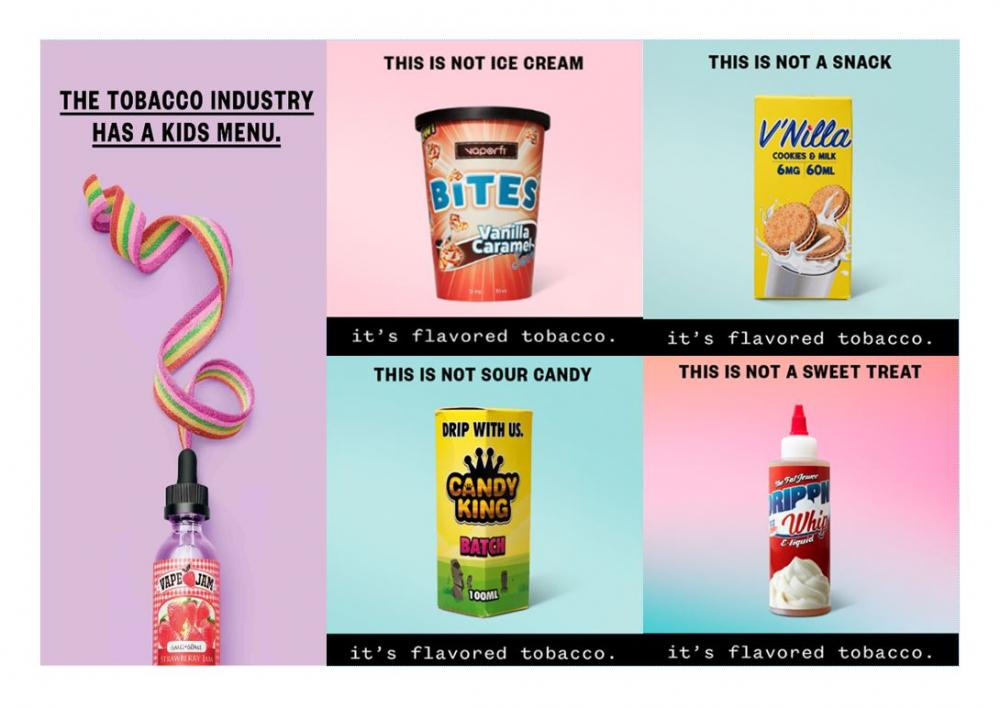
There are more than 15,500 artificial flavors used in nicotine products. These flavors entice kids to start using nicotine at the stage of development when the brain is most vulnerable to addiction. Youth are naturally drawn to bright colors, fun characters, and candy-like tastes. Fruity, candy-inspired flavors are added to nicotine products specifically to grab kids’ attention. Instead of recognizing the dangers of nicotine, many youth are tempted to try these products simply because they look, smell, and taste like something from the candy aisle.

How do flavors attract kids?
According to Campaign for Tobacco-Free Kids, cigarettes with specific characterizing flavors—except menthol—were prohibited in the U.S. on September 22, 2009, as part of the Family Smoking Prevention and Tobacco Control Act (TCA) that gave the U.S. Food and Drug Administration (FDA) authority over tobacco products. Despite this restriction, the overall market for flavored tobacco products has grown, as the industry continues to introduce and market other flavored tobacco products, particularly e-cigarettes and cigars, as well as smokeless tobacco and hookah. This growing market for flavored tobacco products is undermining the nation’s overall progress in reducing youth tobacco use.
A 2024 Surgeon General’s report concluded that, “The tobacco industry has designed, engineered, and marketed menthol cigarettes and other tobacco products that deliver multisensory flavor experiences which increase the likelihood of tobacco initiation, addiction, and sustained use.” With their colorful packaging and sweet flavors, today’s flavored tobacco products are often hard to distinguish from the candy displays near which they are frequently placed in retail outlets. Although tobacco companies claim to be responding to adult tobacco users’ demand for variety, flavored tobacco products play a key role in enticing new users, particularly kids, to a lifetime of addiction.
What about menthol?
Menthol isn’t just a flavor; it has distinct physiological effects that can make nicotine products more appealing and addictive. Menthol creates a cooling effect, reduces the harshness of cigarette smoke and suppresses coughing. To learn more about menthol in nicotine products, visit The Truth Initiative.
- Menthol activates cold-sensing receptors (TRPM8) in the mouth, throat, and airways, producing a cooling sensation that masks the harshness of smoke or aerosol, making inhalation feel smoother and less irritating. Source: Yale Medicine
- Menthol has antitussive effects (suppresses coughing) and reduces irritation in the airways, giving users the illusion that inhaling tobacco smoke or e-cigarette aerosol is easier or less harmful. Source: American Lung Association
- Research shows menthol smokers often report enhanced “throat hit,” satisfaction and reward sensations, which can reinforce continued use. These sensory effects are linked to increased dependence and reduced success in quitting. Source: ScienceDirect
- Beyond sensory masking, menthol may influence nicotine addiction biologically. Scientific reviews indicate menthol can interact with nicotinic acetylcholine receptors in the brain, potentially enhancing nicotine’s addictive effects and increasing dependence compared to non-menthol products. Source: Tobacco Control Center
Aren't vapes or e-cigarettes safer?
According to the U.S. Surgeon General, youth use of nicotine in any form, including e-cigarettes, is unsafe.
Most e-cigarettes do contain nicotine, which is highly addictive. It can harm parts of the adolescent brain that control attention, learning, impulse control and mood.